installation
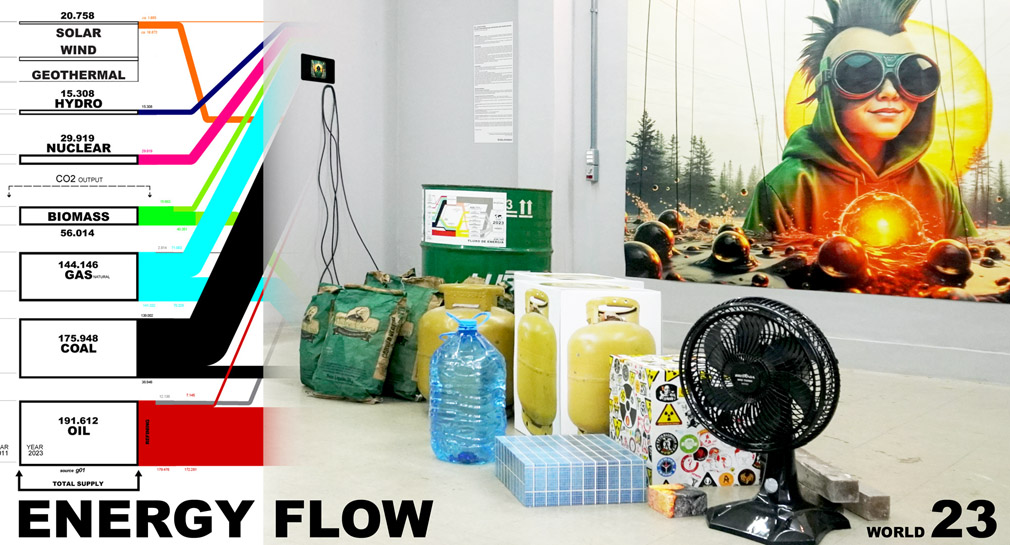
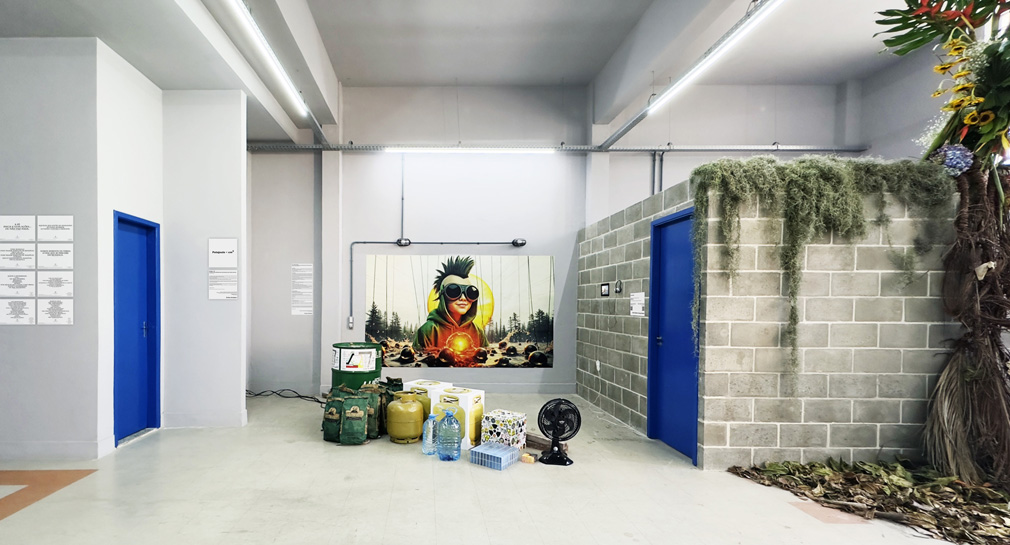
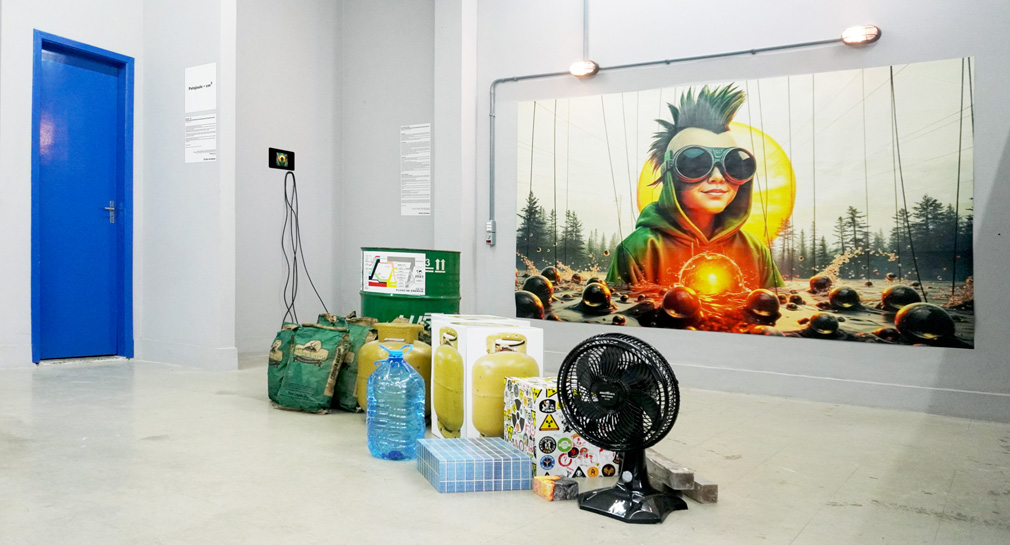
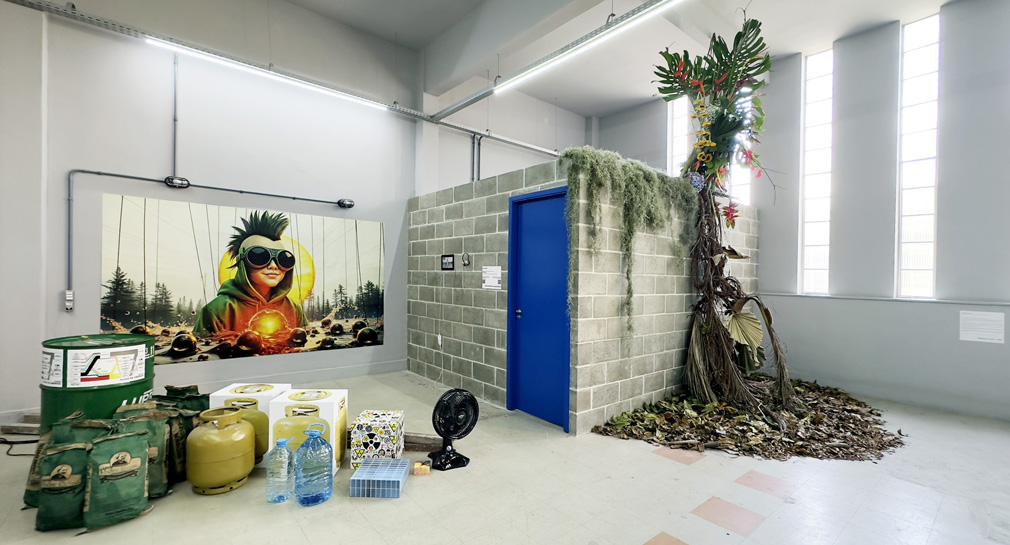
Energy Flow Installation 1.1
subtitle
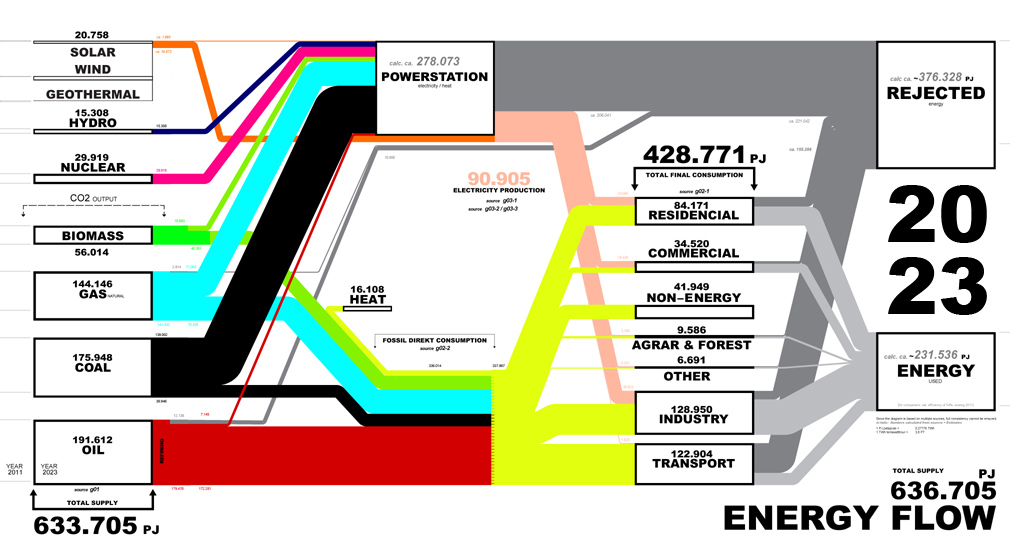
2023 world Energy Flow
year
2025 11
material
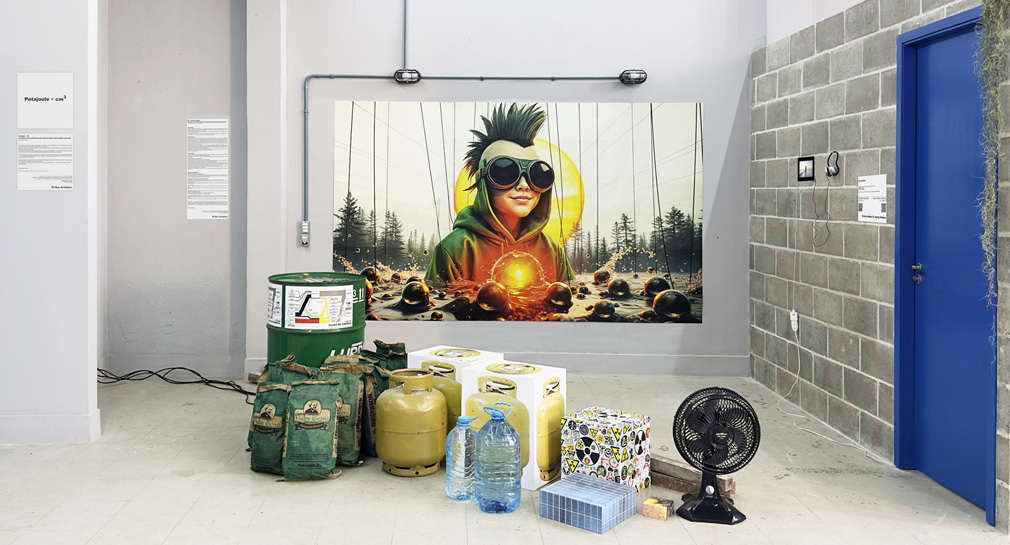
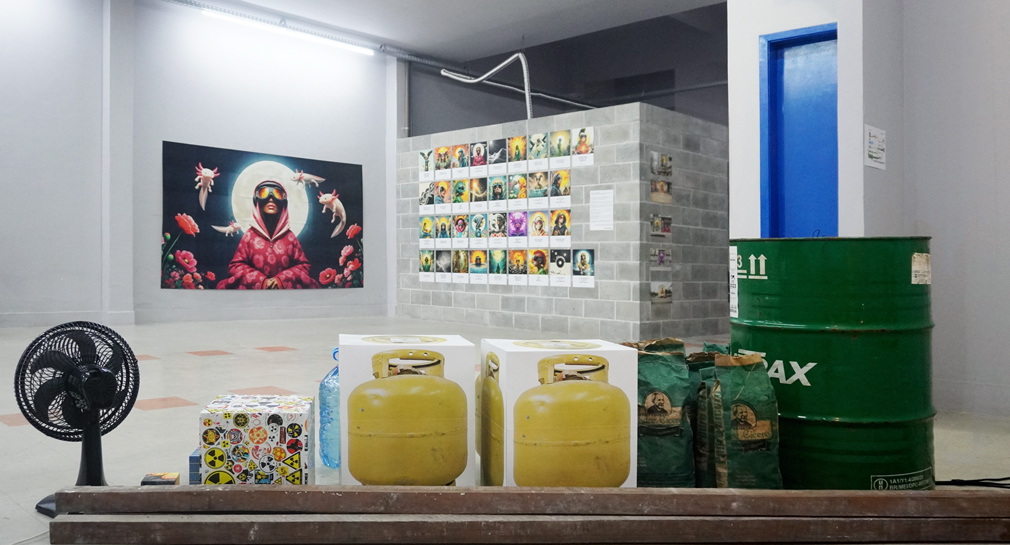
Oil barrel, coal, gac cylinder, watterbottles, wood, fan, box with solarpanel prints, box with nuclearenergy prints, box with geothermal prints,
seize
ca. 600 x 100 x 100cm
exhibitions
2025 11 22 . Eco Echo . Rio de Janeiro >
info
sculpture visualising the energy supply for the world in 2023
Energy – AI
The future is so bright you‘ve got to wear shades
Energy consumption
[AI & energy: The mass production of images demands energy. As human brainpower is offloaded onto machines, that energy too must be drawn from the Earth and the sun.]
Between 2011 and 2023, statistics reveal a runaway rise in global energy consumption, requiring ever more land and resources from the planet.
The expansion of renewable energy has not kept pace with rising demand—let alone replaced the fossil fuels that release CO2 from carbon mostly stored between 250 and 66 million years ago.
That CO2 now lies over the atmosphere like a blanket, heating the planet and turning the oceans into acidic pools—beginning to end the pleasant conditions that made the rise of human culture, starting around 11,000 years ago (the end of the last ice age), possible.
We are exponentially extracting energy from the only place that sustains our life, in pursuit of a vaguely defined goal of expansion, optimization, and automation.
If we respect the limits set by physics, reduction is the possible—but seemingly impossible—way forward.
Petajoule ≡ cm3
1 PJ = 0,2778 TWh
The future is so bright you‘ve got to wear shades
Energy consumption
[AI & energy: The mass production of images demands energy. As human brainpower is offloaded onto machines, that energy too must be drawn from the Earth and the sun.]
Between 2011 and 2023, statistics reveal a runaway rise in global energy consumption, requiring ever more land and resources from the planet.
The expansion of renewable energy has not kept pace with rising demand—let alone replaced the fossil fuels that release CO2 from carbon mostly stored between 250 and 66 million years ago.
That CO2 now lies over the atmosphere like a blanket, heating the planet and turning the oceans into acidic pools—beginning to end the pleasant conditions that made the rise of human culture, starting around 11,000 years ago (the end of the last ice age), possible.
We are exponentially extracting energy from the only place that sustains our life, in pursuit of a vaguely defined goal of expansion, optimization, and automation.
If we respect the limits set by physics, reduction is the possible—but seemingly impossible—way forward.
Petajoule ≡ cm3
1 PJ = 0,2778 TWh
add
5
ADDITIONAL
5_1
We can move beyond the capitalist model and save the climate – here are the first three steps:
LLNL
Article, The Guardian, 2026 02 12
Jason Hickel and Yanis Varoufakis
LLNL
Article, The Guardian, 2026 02 12
Jason Hickel and Yanis Varoufakis

4
.
3
.
2
.
1
.
May 4th, 2026